
Wake-up light alarm clocks are quietly transforming mornings, replacing the jarring shock of traditional alarms with a gentle sunrise that feels natural and calming.
If you’ve ever dreamed of starting your day with more energy, better mood, and less grogginess, this simple shift can make a surprising difference.
These lights do more than wake you up they create an atmosphere that supports your body and mind from the moment you open your eyes. Keep reading to discover why so many people swear by them.


How a Wake Up Light Gently Transforms Your Morning Routine
Switching from a harsh phone alarm to a wake-up light may seem minor, but it can change the way your mornings begin.
Instead of being startled out of sleep, you’re guided awake by a gradual rise in light that works with your body rather than against it.
As the brightness slowly builds, your brain receives a calm signal that the day is starting.
Because this process supports your circadian rhythm, you’re less likely to feel pulled out of deep rest.
You wake with a clearer head and a steadier mood, making it easier to approach the morning with motivation instead of resistance.
That gentler start sets an emotional foundation before you even step out of bed.
Why Waking Up With Light Feels So Much Better Than Sound
Waking up to light rather than sudden noise allows your body to do what it’s meant to do.
Instead of being startled into alertness, you rise gradually, which helps protect your sleep quality and prevents that panicked jump out of deep rest.
Light signals help regulate your circadian rhythm, creating the sense that you’re waking in step with the day.
Your mood tends to follow, easing into the morning with less tension and more calm. For anyone sensitive to sound or prone to restless nights, avoiding a loud alarm can feel like immediate relief.
Rather than starting the day with a spike in stress, you wake with steady breathing and a clearer mind.
That gentler transition supports better focus and gives you a more natural, lasting lift in energy—without the jittery crash that often comes from abrupt awakenings.
Science Behind Sunrise Simulation and Better Sleep
The steady, clear feeling that comes from waking with light isn’t imagined—it’s simply your body responding the way it’s designed to.
Sunrise-style lighting works because your eyes interpret that gradual brightness as real morning light.
This sets off signals that help your circadian rhythm shift into daytime mode.
As the light builds, melatonin eases off instead of dropping abruptly, so you don’t feel shocked awake.
Meanwhile, cortisol and other morning hormones rise at a calmer pace, helping you start the day with balanced energy.
Your brain also moves more smoothly from deep sleep into lighter stages, rather than being pushed out of rest by a loud alarm.
That gentler shift can improve overall sleep quality and make it easier to feel naturally alert soon after waking.
How Light Alarms Help Regulate Your Body Clock
There are many benefits to using a wake-up light. Rather than letting irregular bedtimes or loud alarms dictate your mornings, a wake-up light can help steady your internal clock.
When the gradual increase of light matches the time you want to wake, your circadian rhythm starts to follow a more reliable pattern.
That consistent morning cue gently guides your sleep cycles, which often improves the quality of your rest.
Your body responds to this light by adjusting hormone levels for the day ahead—melatonin eases off, alertness hormones rise, and you wake feeling clearer instead of stunned.
You will naturally begin to feel tired at the same time each night and more refreshed at the same time each morning.
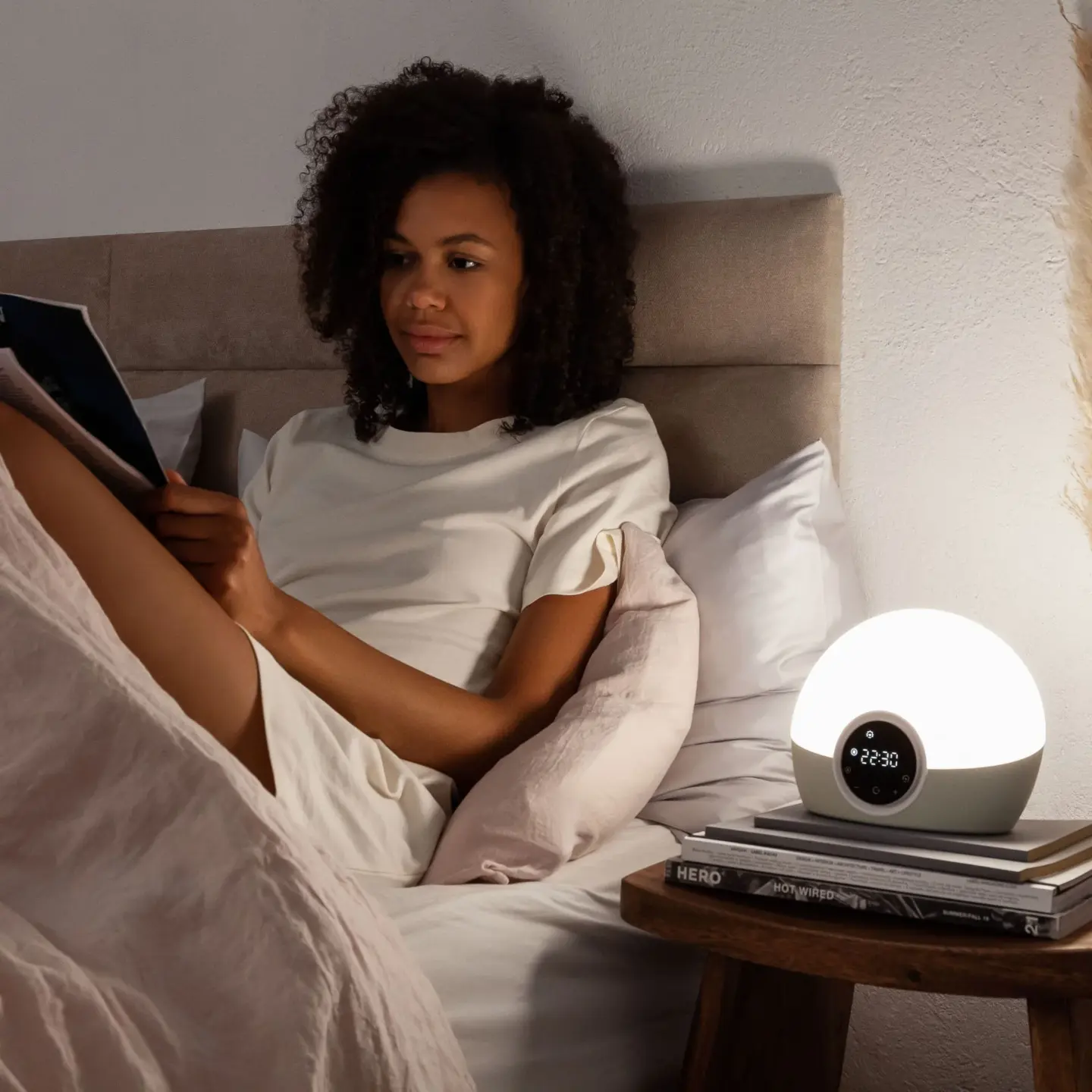
Why Wake Up Lights Are Perfect for Dark Winter Mornings
Winter mornings often feel darker than they should, but a wake-up light brings a steady, sunrise-like brightness that helps break through that gloom.
Instead of being yanked out of sleep by a loud alarm in a dark room, you wake gradually as the light increases, giving your body a gentle signal that the day is starting. The transition feels far more natural and far less jarring.
This kind of light exposure can also soften the effects of winter blues by giving your brain a dose of light before the real sun shows up.
Many people notice a lift in mood, steadier emotions, and a bit more energy—making those slow winter mornings easier to face.